There are many, many things that are needed to be done for the NYC subway. The major projects of the subway being perused right now are: Second Ave Phase 2, the IBX, system-wide accessibility, and CBCT. These are all extremely important, and finishing them will open up more room to do more needed big projects like QueensLink, Astoria Line extension, SAS Phases 3 and 4, Utica Ave Subway, Northern Blvd Subway, etc etc. But despite all of this, there are a lot of smaller things the MTA should probably look into doing as well. The point of these projects is that they should be relatively easy to do. I’m defining that as an expected project cost of less than $1B (ideally much less). Also this list is far from definitive, its more just the projects that I find interesting. This idea is loosely inspired by JTA’s video “Low Priority Projects that the NYC Subway should do,” but the projects I talk about here are completely different that what he talks about in his video.
Union Ave Stop on the J/M
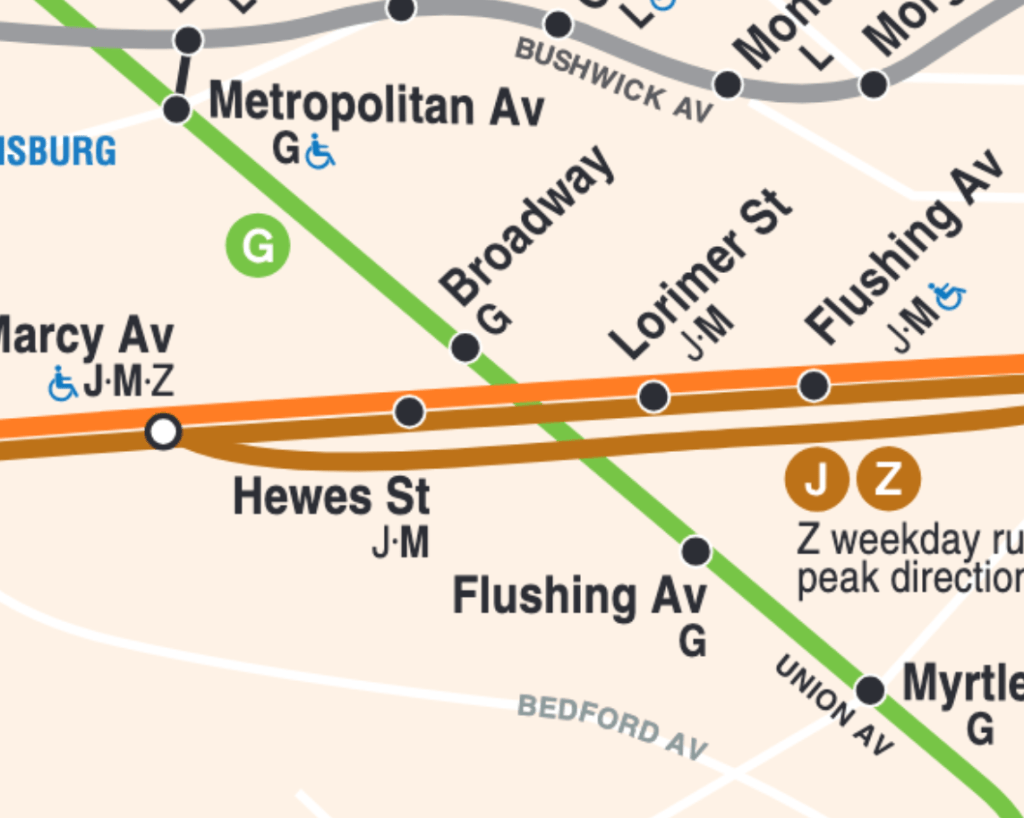
This is the single most popular “cheap thing the MTA should do” that is suggested, and for a good reason: the benefits are obvious and the downsides are limited. This plan would entail closing the Hewes St and Lormier St stations on the J/M trains, and opening a new station at Union Ave that has a connection to the G train at Broadway. This will give G train riders easier access to downtown Manhattan, eastern Brooklyn, and Jamaica, taking a “seat” off their ride to any of those places (meaning if you wanted to go from, say, Bedford-Nostrand to Jamaica, right now you would have to go G -> A -> J, but with this stop you could now just do G -> J). Similarly, this gives another option for J and M riders, particularly those who live West of Broadway Junction, to get to Queens or other parts of Brooklyn without having to cross into Manhattan. Outside of increased connections, this would also help with some of the MTA’s other projects. By building a new station from scratch, they wouldn’t need to rehabilitate or make accessible Hewes or Lorimer St, and the new Union Ave Station could be built with Accessibility in mind, meaning that the financials of this project are quite favorable. The last benefit is that when the J/M trains are not running to Manhattan due to Weekend work, riders have another option to switch than either Broadway Junction or Myrtle Wyckoff, making the necessary work a bit less painful.
Connect Prince St to Broadway/Lafayette St
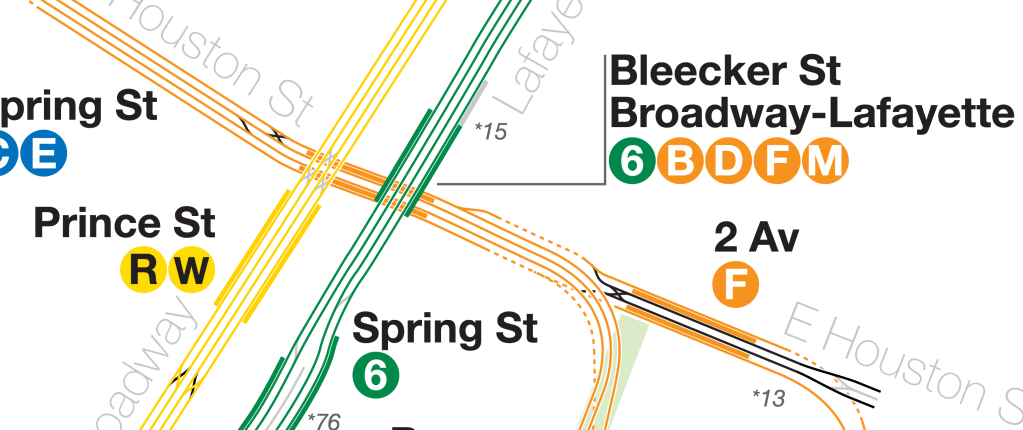
My biggest critique of Sixth Avenue line is that it does not really have a good way downtown. The furthest downtown any of its lines gets to is East Broadway on the F, which isn’t really downtown. There is a connection to the A/C/E at W 4 St, which provides an okay option for getting further downtown, but it only goes to Fulton St, meaning if someone was going even further to Wall St or the Staten Island Ferry they would need to switch again. The closest spot someone could do that on would be at 14 St to switch to a 1 train, but that connection is awful (same with anything at 42 St). The connection to the 6 here is close to being helpful, except for the fact that the 6 ends at Brooklyn Bridge City Hall, a similar problem to the A/C. This is the reason why I want a connection to the Prince St station. It may seem redundant from the fact that 6th Ave already has okay connections to the Broadway Line, but a lot of those connections are bad and this one has the potential to be a very easy connection. While the benefit isn’t huge, the distance to cover is so small that at its smaller cost it is still worth it.
QBL Local Extension to St. Johns University
Cold take: Forest Hills is a bad terminal. We all know that it is a pretty poor terminal, kneecapping M and R service. It is also the reason why we don’t see G trains on QBL anymore either. Now there already exists a project to help solve this issue – QueensLink. By diverting M trains to the Rockaways, less trains will have to turn around at Forest Hills, meaning we could either increase R service or bring the G back. However, while QueensLink is a great plan, it has always bothered me that it doesn’t really address the root issue that Forest Hills is a bad terminal. I think it would be much better to give QBL local a proper two track terminal so even if there is construction or we have to divert trains, we have terminals that can handle it. Lets first understand what the tracks look like to know our options.

So despite the local services on QBL ending at Forest Hills, it is actually built as a 4 track express all the way to Jamaica-179 St (with two tracks diverging off to serve Jamaica Center). Also, Kew Gardens is configured as an express station, meaning that it could serve as the last station to have both locals and expresses. So my plan would be to have the locals run to Kew Gardens, and the expresses will stay express until then as well (meaning that 75 Ave will only be served by locals. This change so far requires 0 infrastructure). Then at Kew Gardens, the locals will turn under Borough Hall and the massive highway interchange and pop up as an elevated in the empty space between the Grand Central Parkway and Union Turnpike. Then, it will run elevated above Union Turnpike to St John’s University (about 1.5 miles), where it will have a proper 2 track terminal with tail tracks. This will mean >36 tph will be able to be terminated here, allowing plenty of service on QBL local. It also will add service to a University and parts of Union Turnpike which would benefit from better Subway Service. This could be extended in the future, but beyond St. Johns are single family homes, so the value of such an extension is questionable.
Q Train to Nostrand Ave
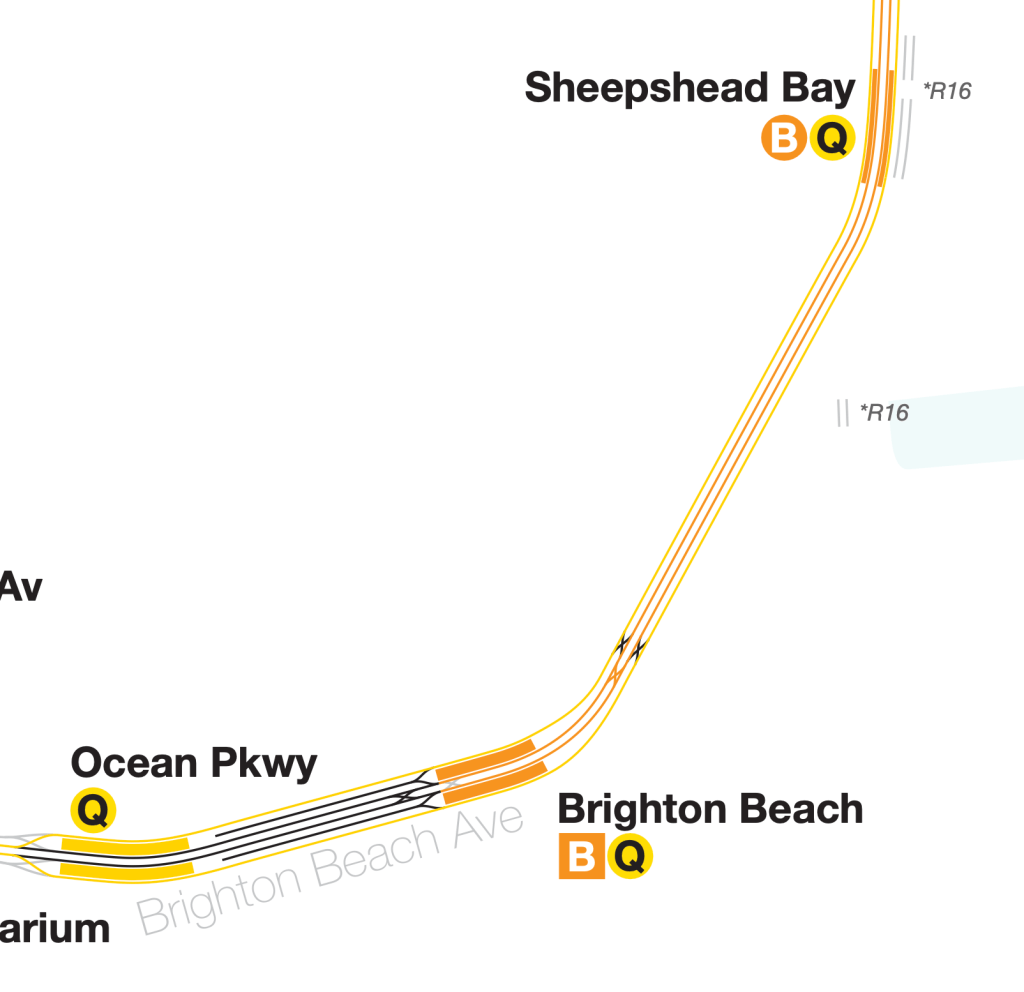
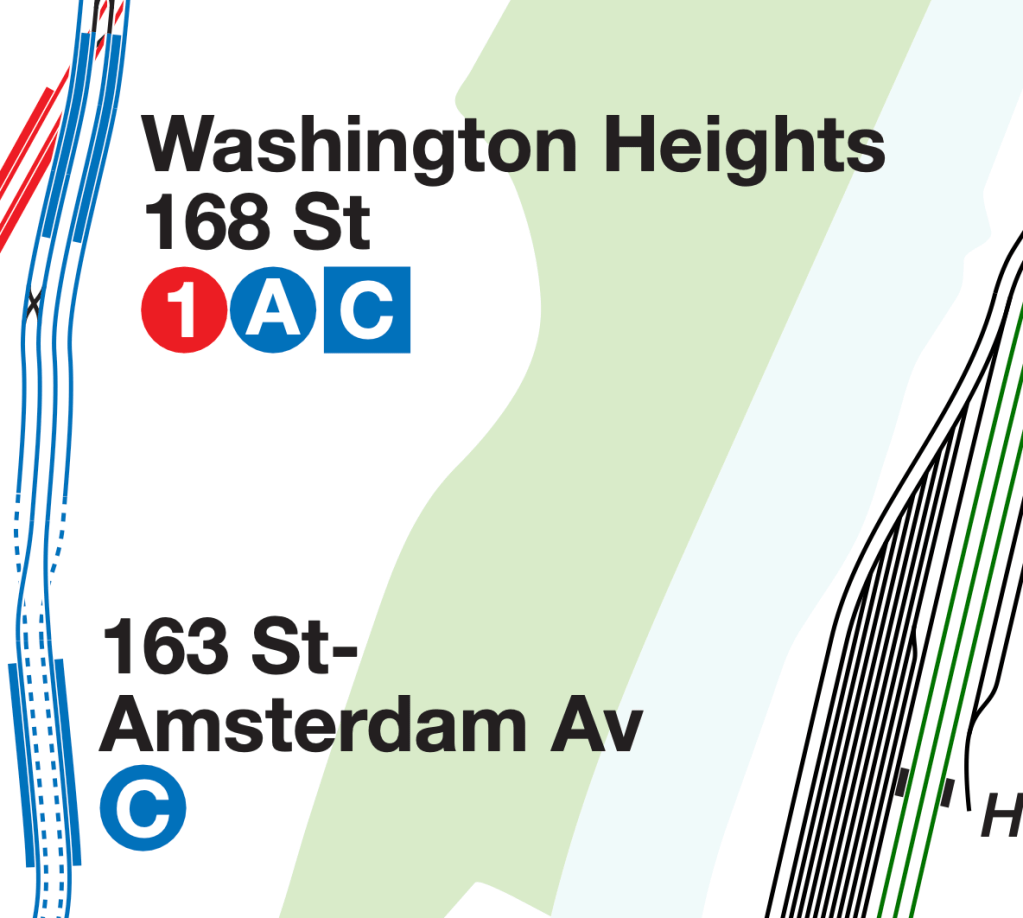
Like many others, I am a bit bothered by the fact that the Q extends further than the B on the Brighton Line. After all, the furthest out destinations should have default express service, and Coney Island is dominated by a bunch of trains that run local for at least 10 stops before and express portion. Having a true express train that starts at Coney Island, then runs express up Brighton, would be huge. However, the track layout at the end of the Brighton line has the local and express combining into one track, and since the local is on the outside, only the express could turn around before then, which is why the B, despite being the express, is the train that turns around here. Now the simpilest way to solve this problem is to reconfigure the tracks so that the local ends on the inside and the express ends on the outside – like what the A/C do in Washington Heights.
This would work, but it would be disruptive. And if we are going to spend money and be disruptive, we should be maximizing the benefits that we get out of the project. That’s why I suggest the Q should go to Nostrand. This would work that the B and Q do the exact same thing up to the Sheepshead Bay Station. Then at Sheepshead Bay, the Q would turn East and run over the Belt Parkway a bit under a mile to Nostrand Ave, terminating there. The B would then be the sole train that runs to Coney Island from there. This would likely be similar in costs to a project that reconfigures the tracks to run on the inside, but has the benefit of serving a new area that doesn’t have transit access. I know that a highway median station is not great, but this is a one stop extension and this has the benefit of having very little Nimbyism to worry about.
Conclusion
These are some of the ideas that I have come up with as “small improvements to the system that the MTA could make”. I hope that smaller projects like these could be taken on to help fill in the smaller issues on the subway system while the larger issues still get tackled. I’ll probably make another one of these in the future because I have more of these ideas!
 David Rosenstein's Blog